Rome
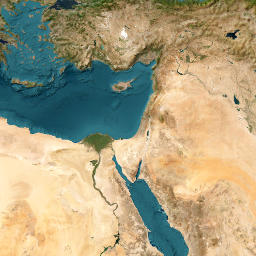
© Esri, Maxar, Earthstar Geographics
Seat of the papacy and the Catholic Church. Lapide was summoned here by his Jesuit superiors after more than twenty years teaching at Louvain. He taught and later devoted himself to private writing, comparing his cell to Jerome's Bethlehem. He died in Rome on 12 March 1637. Clement VIII issued his bull on the Vulgate from St. Peter's.
Preliminaries
-
Title Page
— Lapide described as teaching "afterwards at Rome"
"formerly professor of Holy Scripture at Louvain, afterwards at Rome"
-
Permissions
— Vitelleschi's permission letter dated at Rome
"we have given these letters signed with our own hand and secured with our seal, at Rome, 9 January 1616"
-
THE LIFE OF CORNELIUS A LAPIDE.
— Lapide summoned to Rome by his superiors
"was then summoned to Rome by his superiors, where he expounded the same subjects for many years"
-
THE LIFE OF CORNELIUS A LAPIDE.
— Lapide found in Rome what Jerome sought in Bethlehem
"whose holy Bethlehem, so earnestly sought by him in Palestine, I have found here in Rome"
-
THE LIFE OF CORNELIUS A LAPIDE.
— Lapide died in Rome on 12 March 1637
"he paid at last the debt of nature in the Holy City, where he had always desired to mingle his bones with those of the saints, on 12 March in the year 1637"
-
POPE CLEMENT VIII. FOR A PERPETUAL MEMORIAL OF THE MATTER.
— Clement VIII's bull given at Rome, at St. Peter's
"Given at Rome, at St. Peter's, under the Fisherman's Ring, on the 9th day of November 1592"
Pope Clement VIII, Jerome's Prefaces, On Worship
-
II. JEROME TO PAULINUS.
— Rome could not draw men to contemplate itself, but the fame of one man (Titus Livius) brought them there
"those whom Rome had not drawn to contemplate itself, the fame of one man brought there"
-
ON THE WORSHIP OF JESUS CHRIST IN THE SCRIPTURES.
— Lacordaire says Rome with its tribune and wars still pursues us with its invincible image
"Rome, with its tribune and its wars, still pursues us with its invincible image"
-
ON THE WORSHIP OF JESUS CHRIST IN THE SCRIPTURES.
— Rome produced Livy before dying and inspired Tacitus under Nero
"it was Rome that produced Livy before dying, and it was Rome still that inspired Tacitus"
-
ON THE WORSHIP OF JESUS CHRIST IN THE SCRIPTURES.
— Rome condemns Christ; Paul's chains and blood sanctify Rome's dust
"Rome at last touches his chains and drinks of his blood upon its glorious dust"
-
ON THE WORSHIP OF JESUS CHRIST IN THE SCRIPTURES.
— John saw idolatrous Rome fall in the Apocalypse
"saw idolatrous Rome fall"
Preface and Praise of Sacred Scripture
-
Chapter IV: The Judgments and Examples of the Fathers
— Pope Agapetus endeavored to introduce at Rome schools of sacred Scripture like those at Alexandria and Nisibis
"together with the most blessed Agapetus of the city of Rome"
-
Chapter IV: The Judgments and Examples of the Fathers
— Cassiodorus strove to have accredited Doctors received into a Christian school at Rome
"so by pooling resources in the city of Rome, accredited Doctors might rather be received into a Christian school"
-
Saintly Examples of Scripture Study
— St. Dominic at Rome and elsewhere publicly taught many books of Scripture
"at Rome and elsewhere he publicly taught many of its books"
Commentary on the Pentateuch of Moses
-
Sacred Chronology
— Founding of Rome as a chronological marker: AM 3250
"Years from the beginning of the world to the founding of Rome: 3250"
-
Sacred Chronology
— Pagans reckon times from the founding of the city of Rome
"from the founding of the city of Rome, which occurred near the end of the reign of Jotham, king of Judah"
Chapter I (The Six Days of Creation)
-
Verse 22: And He Blessed Them, Saying: Increase and Multiply
— Geese at Rome protected the Capitol against the Gauls by rousing sleeping guards
"Hence at Rome, geese once protected the Capitol against the Gauls, enemies creeping in, by rousing the sleeping guards with their cries."
-
Verse 22: And He Blessed Them, Saying: Increase and Multiply
— St. Ambrose addresses Rome, saying it owes its sovereignty to the geese
"Rightly, he says, to them (the geese), O Rome, you owe your sovereignty."